



25 Mars 2025
Researchers test cereals with greater potential to save the Montagu's harrier and increase national cereal production
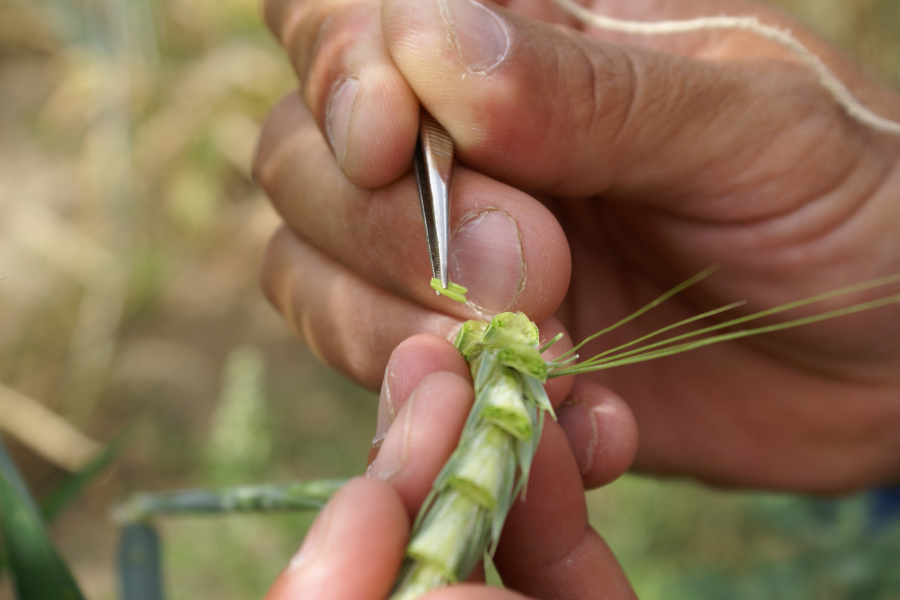
Soft wheat; one of the steps in the crossbreeding carried out with the intervention of researchers in the field (removal of stamens, male organs). Photo: Rita Costa/INIAV.
Researchers at the National Institute for Agricultural and Veterinary Research (INIAV) are conducting trials to select cereal varieties that are best suited to the Montagu's harrier's reproductive cycle and the regions where they are grown, with the aim of saving this species from imminent extinction and increasing national cereal production, combining nature conservation with the promotion of agriculture.
Developed as part of the LIFE SOS Pygargus project, coordinated by Palombar, these trials also involve ANPOC and CCDR-N, partners in the project.
First trial campaign already underway
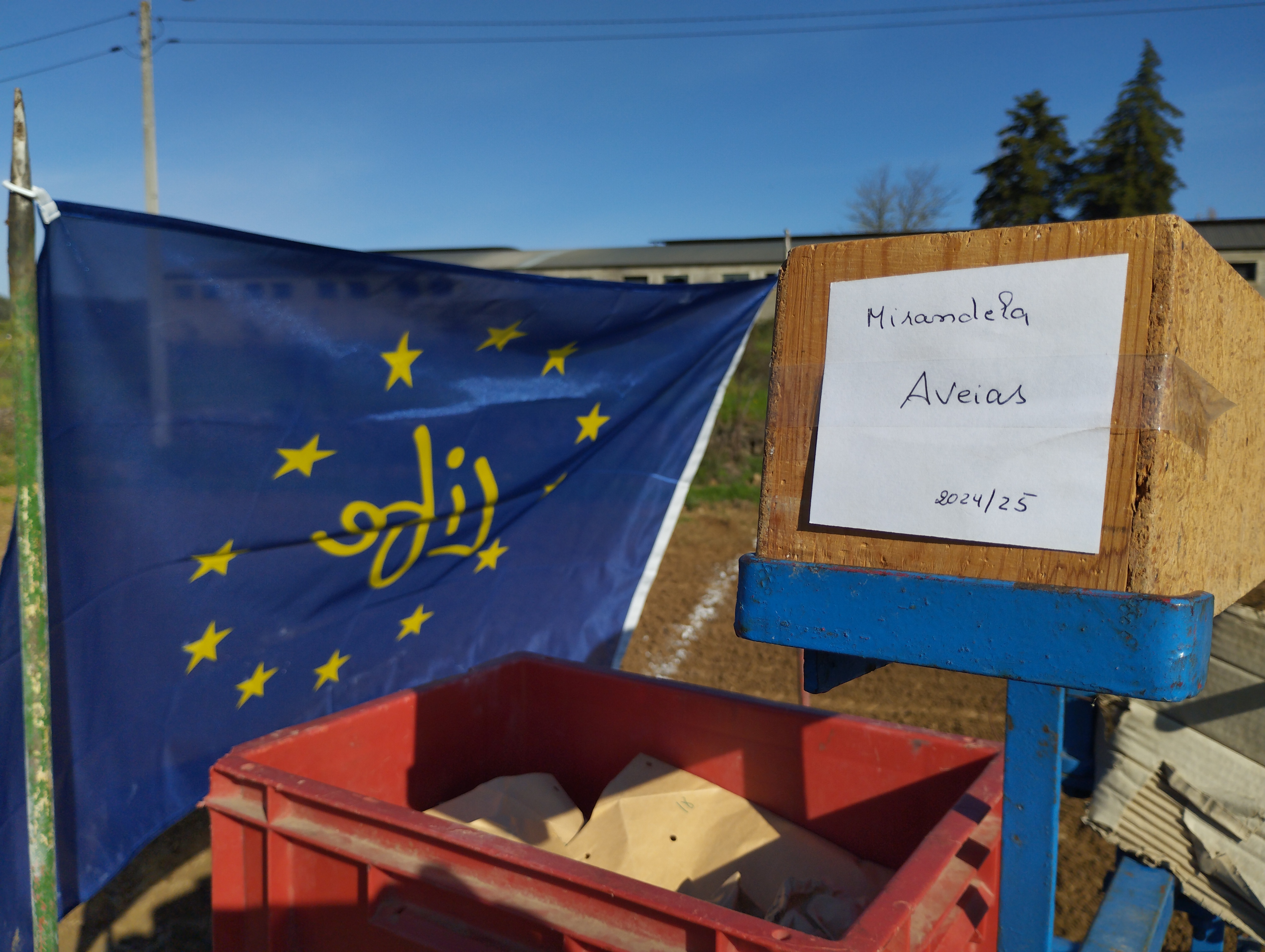
The first campaign of trials to select cereal varieties began in December 2024, at Quinta do Valongo, in Mirandela (belonging to the CCDR-N's Mirandela Innovation Hub), in Trás-os-Montes, with a total of 20 varieties tested from the soft wheat, barbela wheat, rye, oat and triticale species. The same varieties are also being tested at INIAV's Elvas Innovation Centre in Alentejo.
The trials aim to select the cereal varieties that are best suited to the reproductive cycle of the Montagu's harrier, best adapted to the climate of the region where they are grown, and most resilient to climate change, as well as resistant to disease, and therefore more productive and with high nutritional value.
The Montagu's harrier (Circus pygargus) is a migratory bird at high risk of extinction, which comes from Africa and stays in Portugal between March and September. In Portugal, its population has declined by 80% in the last ten years. It nests on the ground, mainly in agricultural fields with cereals and fodder, and increasingly, harvesting, particularly for hay, coincides with its breeding season.
Every year, several factors threaten the species, causing mortality and/or a significant reduction in reproductive success, jeopardising its survival in Portugal and Spain. An important factor is habitat loss due to the sharp decline in the area sown with cereals and its replacement by permanent crops or other types of land use, such as infrastructure construction. The replacement of cereal areas with fodder crops and climate changes have significantly increased harvesting activities during the nesting period, with a strong impact on breeding pairs due to the destruction of nests and increased predation rates.

The later the cereal harvest, the greater the likelihood that Montagu's harrier chicks will thrive and survive, helping to save the species. This will therefore be a key characteristic to consider when selecting varieties.
"The future of the Montagu's harrier is strongly linked to the sustainability of cereal cultivation. It depends on our ability to reconcile agriculture and conservation, creating value for both. Choosing cereals that respect the life cycle of this species is not only about saving the harrier, but also about promoting more biodiverse and sustainable agricultural landscapes for everyone, with an appreciation of bird- and consumer-friendly practices", says biologist Joaquim Teodósio, project coordinator.
Genetic improvement and selection
The different cereal varieties tested, all of national origin, come from INIAV's Cereal Genetic Improvement Programme. This programme is based on targeted and controlled crossbreeding, which is carried out in the field between germplasm of the same cereal species, selecting those genotypes that meet the desired characteristics, which are subsequently evaluated and validated by genetic selection in the field.
"It is important to note that, in this type of cereal, which belongs to autogamous species, there is no cross-pollination, i.e., one of the methodologies used to promote genetic variability, which is essential in a genetic improvement programme, is induced artificial crossbreeding. By crossing individuals within the same species, we promote recombination, the selection of the best genotypes and genetic improvement, thus obtaining new varieties with characteristics superior to the existing ones. It should be noted that, in this type of improvement, there is no editing or modification of genes, only recombination and selection of the genotypes that best meet the desired requirements," explains Rita Costa, a researcher at INIAV.
The project aims to encourage the cultivation of selected cereal varieties in the north of the country, boosting national cereal production while protecting the Montagu's harrier, a species that has a vital habitat in this region. To this end, ANPOC intends to create an organisation of cereal producers in the north, which will be fundamental in leveraging the sector and promoting food security by increasing the national supply of this essential raw material.
"One of the most notable features of this project is that it responds in an integrated way to the three pillars of sustainability: environmental, social and economic. The creation of a Producers' Organisation in the north of the country is fundamental to this end, as it will bring together agricultural agents, create scale and boost businesses that effectively promote cereal production in the region. Bringing farmers together and developing work in the sector, from production to marketing, without forgetting research, is crucial to sustaining the project in the long term," says Astride Sousa Monteiro, executive director of ANPOC.
Cereals intended for the production of value-added bread
The cereals grown, wheat and rye, are used to produce differentiated breads with added value for Continente stores. These products play an important role in raising consumer awareness of biodiversity. The Continente Producers' Club is a key partner in this project, committed to offering bread made from national cereals sourced from biodiverse fields that ensure the conservation of endangered species, such as the Montagu's harrier.
"This project is the result of a multidisciplinary consortium and allows us to safeguard a species that we know is endangered. Whether through selecting the best varieties or sharing appropriate practices with producers, we seek to align these good practices with the needs of the market and our customers, offering bread made from national cereals sourced from fields monitored to protect the Montagu's harrier," says Ondina Afonso, president of Continente Producers' Club.
Extending the cultivation of selected varieties to Spain
LIFE SOS Pygargus covers the main areas of distribution of the species in the Iberian Peninsula. In this regard, it is also essential to find solutions to increase the area cultivated with harrier-friendly cereals in the Portuguese-Spanish border region, contributing to expanding the nesting habitat and improving the survival of chicks, as well as reducing the mortality of the species. To this end, the role played by the Consejeria de Agricultura, Ganaderia y Desarrollo Sostenible - Junta de Extremadura, in Spain, also a partner in the project, will be fundamental. It will work to encourage the cultivation of these cereals in this Spanish region, in synergy with LIFE Agrosteppes and the Centro de Investigaciones Científicas y Tecnológicas de Extremadura (CICYTEX).
"The technical managers of the Junta de Extremadura project consider that LIFE SOS Pygargus, which combines the conservation of endangered species, such as the Montagu's harrier, with the preservation of the agricultural environment and farming systems, as well as improving and encouraging the cultivation and production of cereals, is fundamental. This is because, in addition to ensuring the future of the species, it also has a positive impact on maintaining the rural population and the agricultural environment," points out María Jesús Palacios, head of the Wildlife Department of the Regional Government of Extremadura.
About the project
LIFE SOS Pygargus - Urgent conservation actions to sustain Portuguese and transborder populations of the Montagu’s harrier is an Iberian project that brings together conservationists, farmers, scientists and public and private entities in an unprecedented effort to save this migratory bird from imminent extinction in some of its main areas of distribution in the Iberian Peninsula.
It combines nature conservation and agriculture to protect this species, which is fundamental to the balance of ecosystems. It is 75% funded by the European Union's LIFE programme and co-funded by Viridia – Conservation in Action, Lightsource bp and the Environmental Fund.
It is implemented by a consortium comprising Palombar – Conservação da Natureza e do Património Rural (coordinating entity), BIOPOLIS-CIBIO Association, AEPGA - Associação para o Estudo e Proteção do Gado Asinino, ANPOC - Associação Nacional de Produtores de Proteaginosas, Oleaginosas e Cereais, CCDR-N - Comissão de Coordenação e Desenvolvimento Regional do Norte, EDIA - Empresa de Desenvolvimento e Infraestruturas do Alqueva SA, ICNF - Instituto da Conservação da Natureza e das Florestas, INIAV - Instituto Nacional de Investigação Agrária e Veterinária, LPN - Liga para a Protecção da Natureza, MC Shared Services SA, Modelo Continente Hipermercados SA, SPEA - Sociedade Portuguesa para o Estudo das Aves, UTAD - Universidade de Trás-os-Montes e Alto Douro, Vita Nativa - Conservação do Ambiente, AMUS - Acción por el Mundo Salvaje, Consejeria de Agricultura, Ganaderia y Desarrollo Sostenible - Junta de Extremadura, GREFA - Grupo de Rehabilitación de la Fauna Autóctona y su Hábitat and the University of Murcia.
Developed as part of the LIFE SOS Pygargus project, coordinated by Palombar, these trials also involve ANPOC and CCDR-N, partners in the project.
First trial campaign already underway
The first campaign of trials to select cereal varieties began in December 2024, at Quinta do Valongo, in Mirandela (belonging to the CCDR-N's Mirandela Innovation Hub), in Trás-os-Montes, with a total of 20 varieties tested from the soft wheat, barbela wheat, rye, oat and triticale species. The same varieties are also being tested at INIAV's Elvas Innovation Centre in Alentejo.
The trials aim to select the cereal varieties that are best suited to the reproductive cycle of the Montagu's harrier, best adapted to the climate of the region where they are grown, and most resilient to climate change, as well as resistant to disease, and therefore more productive and with high nutritional value.
Oat cultivation at the CCDR-N Innovation Centre in Mirandela, December 2024. Photo: Palombar.
The Montagu's harrier (Circus pygargus) is a migratory bird at high risk of extinction, which comes from Africa and stays in Portugal between March and September. In Portugal, its population has declined by 80% in the last ten years. It nests on the ground, mainly in agricultural fields with cereals and fodder, and increasingly, harvesting, particularly for hay, coincides with its breeding season.
Every year, several factors threaten the species, causing mortality and/or a significant reduction in reproductive success, jeopardising its survival in Portugal and Spain. An important factor is habitat loss due to the sharp decline in the area sown with cereals and its replacement by permanent crops or other types of land use, such as infrastructure construction. The replacement of cereal areas with fodder crops and climate changes have significantly increased harvesting activities during the nesting period, with a strong impact on breeding pairs due to the destruction of nests and increased predation rates.
Male Montagu's harrier. Photo: Filippo Guidantoni/Palombar.
The later the cereal harvest, the greater the likelihood that Montagu's harrier chicks will thrive and survive, helping to save the species. This will therefore be a key characteristic to consider when selecting varieties.
"The future of the Montagu's harrier is strongly linked to the sustainability of cereal cultivation. It depends on our ability to reconcile agriculture and conservation, creating value for both. Choosing cereals that respect the life cycle of this species is not only about saving the harrier, but also about promoting more biodiverse and sustainable agricultural landscapes for everyone, with an appreciation of bird- and consumer-friendly practices", says biologist Joaquim Teodósio, project coordinator.
Genetic improvement and selection
The different cereal varieties tested, all of national origin, come from INIAV's Cereal Genetic Improvement Programme. This programme is based on targeted and controlled crossbreeding, which is carried out in the field between germplasm of the same cereal species, selecting those genotypes that meet the desired characteristics, which are subsequently evaluated and validated by genetic selection in the field.
"It is important to note that, in this type of cereal, which belongs to autogamous species, there is no cross-pollination, i.e., one of the methodologies used to promote genetic variability, which is essential in a genetic improvement programme, is induced artificial crossbreeding. By crossing individuals within the same species, we promote recombination, the selection of the best genotypes and genetic improvement, thus obtaining new varieties with characteristics superior to the existing ones. It should be noted that, in this type of improvement, there is no editing or modification of genes, only recombination and selection of the genotypes that best meet the desired requirements," explains Rita Costa, a researcher at INIAV.

Oat, CCDR-N Mirandela Innovation Hub, February 2025. Photo: Palombar.
The project aims to encourage the cultivation of selected cereal varieties in the north of the country, boosting national cereal production while protecting the Montagu's harrier, a species that has a vital habitat in this region. To this end, ANPOC intends to create an organisation of cereal producers in the north, which will be fundamental in leveraging the sector and promoting food security by increasing the national supply of this essential raw material.
"One of the most notable features of this project is that it responds in an integrated way to the three pillars of sustainability: environmental, social and economic. The creation of a Producers' Organisation in the north of the country is fundamental to this end, as it will bring together agricultural agents, create scale and boost businesses that effectively promote cereal production in the region. Bringing farmers together and developing work in the sector, from production to marketing, without forgetting research, is crucial to sustaining the project in the long term," says Astride Sousa Monteiro, executive director of ANPOC.
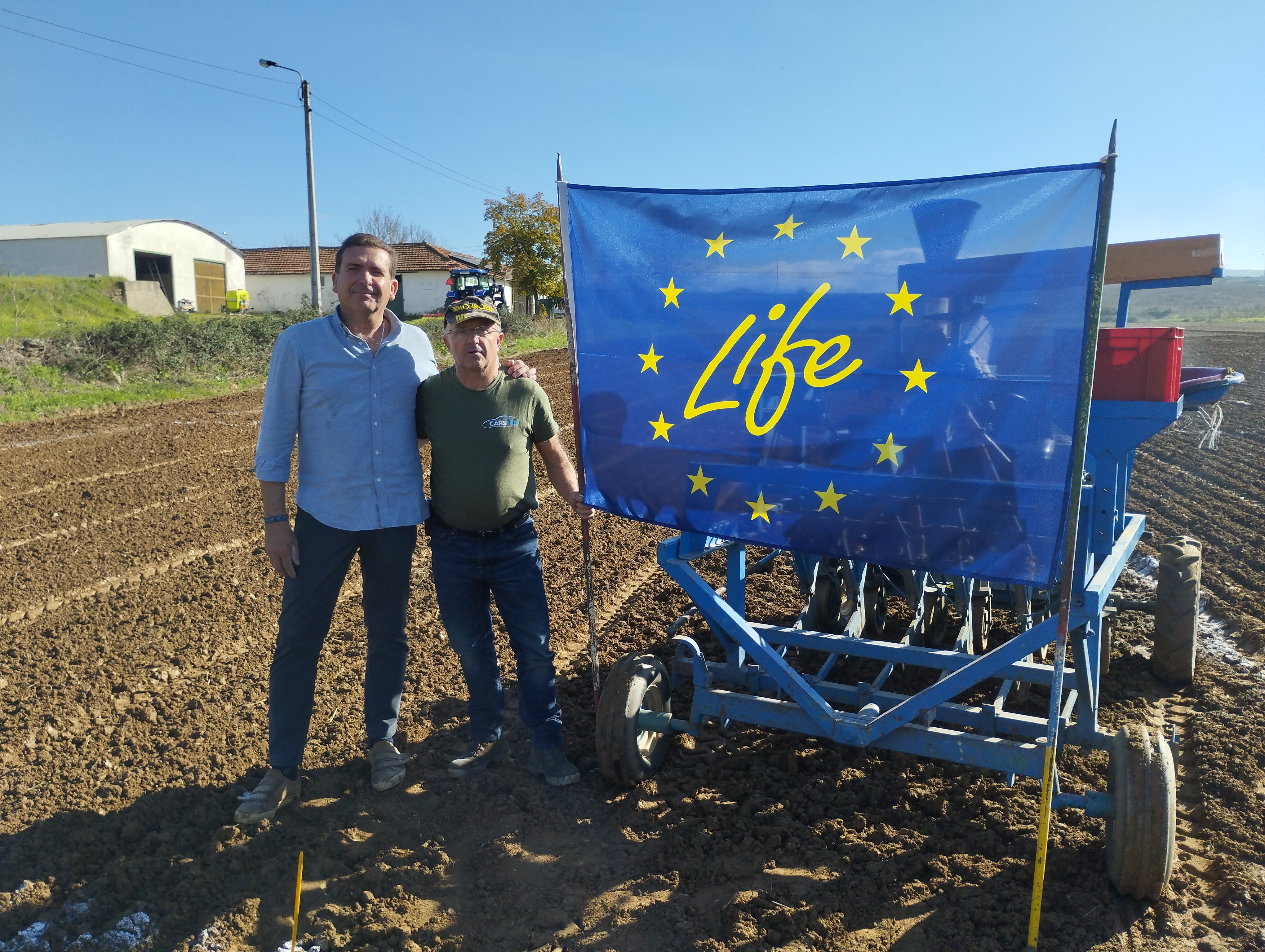
Cultivation of cereal varieties at the CCDR-N Mirandela Innovation Hub, December 2024. Photo: Palombar.
Cereals intended for the production of value-added bread
The cereals grown, wheat and rye, are used to produce differentiated breads with added value for Continente stores. These products play an important role in raising consumer awareness of biodiversity. The Continente Producers' Club is a key partner in this project, committed to offering bread made from national cereals sourced from biodiverse fields that ensure the conservation of endangered species, such as the Montagu's harrier.
"This project is the result of a multidisciplinary consortium and allows us to safeguard a species that we know is endangered. Whether through selecting the best varieties or sharing appropriate practices with producers, we seek to align these good practices with the needs of the market and our customers, offering bread made from national cereals sourced from fields monitored to protect the Montagu's harrier," says Ondina Afonso, president of Continente Producers' Club.
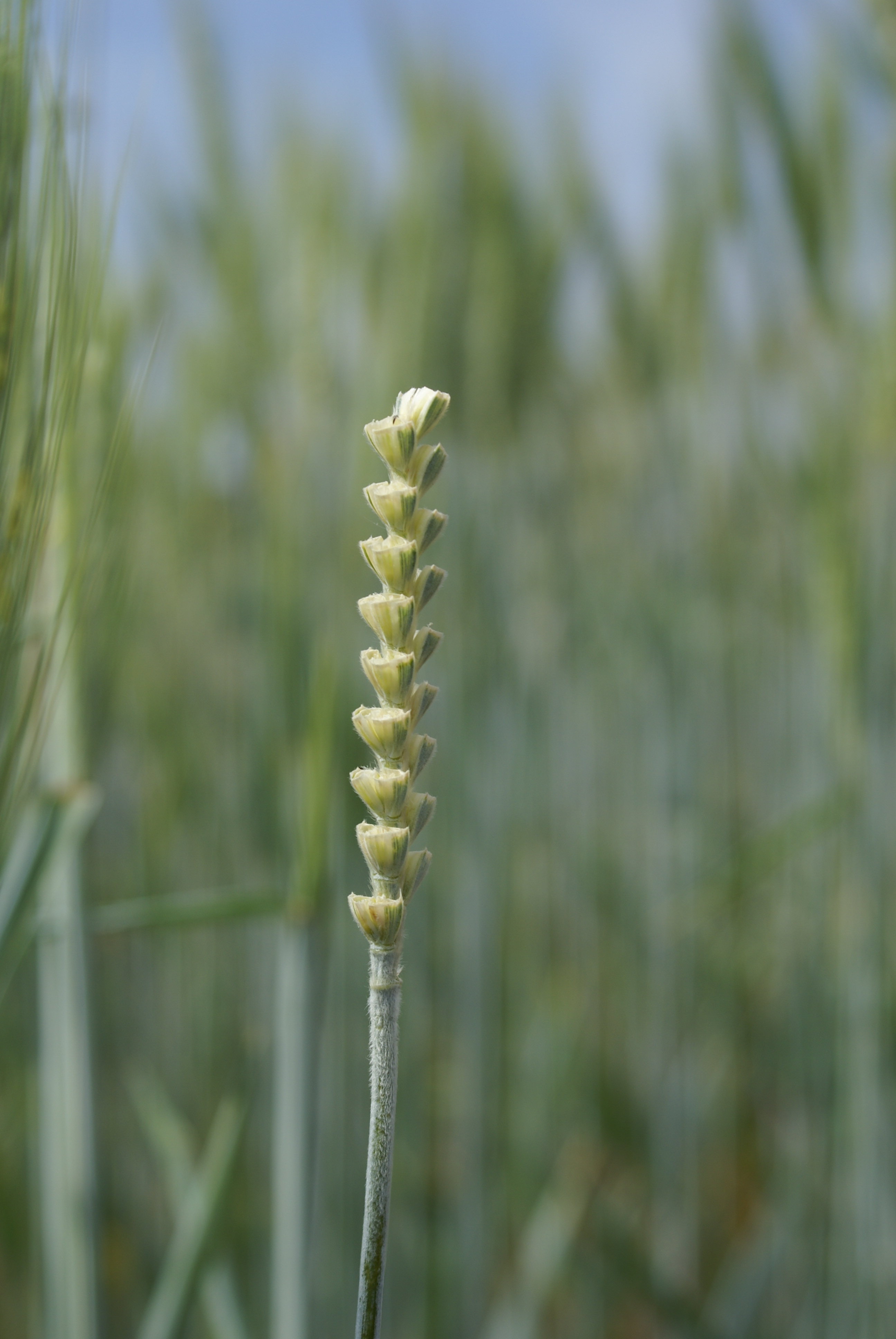
Soft wheat. Photo: Rita Costa/INIAV.
Extending the cultivation of selected varieties to Spain
LIFE SOS Pygargus covers the main areas of distribution of the species in the Iberian Peninsula. In this regard, it is also essential to find solutions to increase the area cultivated with harrier-friendly cereals in the Portuguese-Spanish border region, contributing to expanding the nesting habitat and improving the survival of chicks, as well as reducing the mortality of the species. To this end, the role played by the Consejeria de Agricultura, Ganaderia y Desarrollo Sostenible - Junta de Extremadura, in Spain, also a partner in the project, will be fundamental. It will work to encourage the cultivation of these cereals in this Spanish region, in synergy with LIFE Agrosteppes and the Centro de Investigaciones Científicas y Tecnológicas de Extremadura (CICYTEX).
"The technical managers of the Junta de Extremadura project consider that LIFE SOS Pygargus, which combines the conservation of endangered species, such as the Montagu's harrier, with the preservation of the agricultural environment and farming systems, as well as improving and encouraging the cultivation and production of cereals, is fundamental. This is because, in addition to ensuring the future of the species, it also has a positive impact on maintaining the rural population and the agricultural environment," points out María Jesús Palacios, head of the Wildlife Department of the Regional Government of Extremadura.
About the project
LIFE SOS Pygargus - Urgent conservation actions to sustain Portuguese and transborder populations of the Montagu’s harrier is an Iberian project that brings together conservationists, farmers, scientists and public and private entities in an unprecedented effort to save this migratory bird from imminent extinction in some of its main areas of distribution in the Iberian Peninsula.
It combines nature conservation and agriculture to protect this species, which is fundamental to the balance of ecosystems. It is 75% funded by the European Union's LIFE programme and co-funded by Viridia – Conservation in Action, Lightsource bp and the Environmental Fund.
It is implemented by a consortium comprising Palombar – Conservação da Natureza e do Património Rural (coordinating entity), BIOPOLIS-CIBIO Association, AEPGA - Associação para o Estudo e Proteção do Gado Asinino, ANPOC - Associação Nacional de Produtores de Proteaginosas, Oleaginosas e Cereais, CCDR-N - Comissão de Coordenação e Desenvolvimento Regional do Norte, EDIA - Empresa de Desenvolvimento e Infraestruturas do Alqueva SA, ICNF - Instituto da Conservação da Natureza e das Florestas, INIAV - Instituto Nacional de Investigação Agrária e Veterinária, LPN - Liga para a Protecção da Natureza, MC Shared Services SA, Modelo Continente Hipermercados SA, SPEA - Sociedade Portuguesa para o Estudo das Aves, UTAD - Universidade de Trás-os-Montes e Alto Douro, Vita Nativa - Conservação do Ambiente, AMUS - Acción por el Mundo Salvaje, Consejeria de Agricultura, Ganaderia y Desarrollo Sostenible - Junta de Extremadura, GREFA - Grupo de Rehabilitación de la Fauna Autóctona y su Hábitat and the University of Murcia.